Oil Majors Pocket $93 Billion as Iran Conflict Reshapes Energy Markets
Major oil companies have reaped massive windfall profits linked to Iran war tensions, raising fresh questions about energy market dynamics.

The world's largest oil companies have collectively harvested an estimated $93 billion in windfall gains as conflict involving Iran roiled global energy markets, according to reporting from Yahoo Finance. The figure underscores how geopolitical instability in the Middle East continues to translate directly into extraordinary profits for the petroleum industry's biggest players, even as consumers and governments wrestle with elevated energy costs.
Historically, military conflict or credible threats of it in the Persian Gulf region trigger a risk premium embedded in crude oil prices. That premium benefits producers immediately — their extraction costs remain relatively fixed while the market price of every barrel they sell climbs. The $93 billion figure represents that gap made manifest at an industrial scale, a reminder that for oil majors, geopolitical chaos in a rival producer nation can function almost like a dividend.
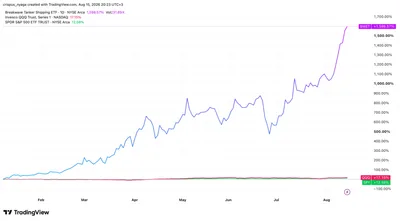
Read more BWET ETF Surges 1,600% in 2026 Amid US-Iran Conflict →
The dynamic raises uncomfortable policy questions that extend well beyond the energy sector. When private corporations systematically profit from warfare or sanctions regimes targeting state adversaries, the alignment between national security objectives and corporate financial interests becomes difficult to untangle. Critics have long argued that such windfalls create perverse incentives, while defenders contend that healthy producer margins are essential to sustaining the capital investment that keeps global supply adequate.
For investors, the numbers reinforce a thesis that has driven energy sector outperformance in recent years: exposure to oil majors functions partly as a geopolitical hedge. When international tensions spike, equity markets broadly tend to falter, yet integrated oil companies often move in the opposite direction. That asymmetry has made the sector increasingly attractive to portfolio managers seeking diversification against macro shocks.
Whether regulators or lawmakers will revisit windfall profit tax proposals in response remains an open question, particularly in an election-sensitive environment where pump prices carry outsized political weight. Continue reading at Yahoo Finance.