Three Dividend Stocks Yielding Over 3% Worth Watching Now
CSL, Accenture, and Commonwealth Bank of Australia offer dividend yields above 3%, making them notable income options in a low-certainty rate environment.

In an environment where bond yields and cash returns remain unpredictable, dividend-paying equities are drawing renewed attention from income-focused investors. A recent analysis highlights three globally recognized companies — CSL (ASX: CSL), Accenture (NYSE: ACN), and Commonwealth Bank of Australia (ASX: CBA) — each offering dividend yields north of 3%, as potentially dependable sources of portfolio income.
The three companies span distinct sectors and geographies, which itself carries analytical weight. CSL is a leading biotherapeutics firm, Commonwealth Bank is one of Australia's largest financial institutions, and Accenture is a global professional services and consulting giant listed on the New York Stock Exchange. Despite their differences in business model and market exposure, all three share the characteristic of generating sufficient cash flow to sustain meaningful shareholder distributions.
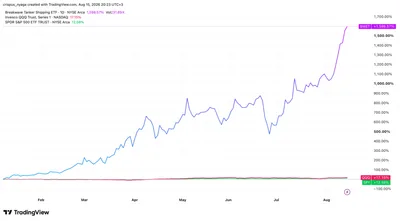
Read more BWET ETF Surges 1,600% in 2026 Amid US-Iran Conflict →
Each company faces its own set of near-term headwinds. Accenture, for instance, operates in a consulting market that has seen clients tighten discretionary technology spending, while CSL navigates the complex dynamics of plasma collection costs and biologics pricing. Commonwealth Bank, meanwhile, contends with Australian mortgage market pressures and regulatory oversight. Yet the analysis frames these challenges as manageable rather than structural threats to dividend continuity — a distinction that matters considerably for income investors evaluating yield sustainability versus yield traps.
For investors building or rebalancing an income-oriented portfolio, the broader takeaway from this kind of screening exercise is methodological: using dividend screeners to identify companies with yields above a defined threshold, combined with a qualitative review of business fundamentals and payout coverage, can surface opportunities that pure index investing might obscure. Market capitalization and operational scale, as represented by all three firms here, can also serve as a rough proxy for dividend durability during periods of economic softness.
Continue reading at Sahm