BWET ETF Surges 1,600% in 2026 Amid US-Iran Conflict
The Breakwave Tanker Shipping ETF has dramatically outpaced SPY and QQQ as war disrupts key oil shipping lanes.
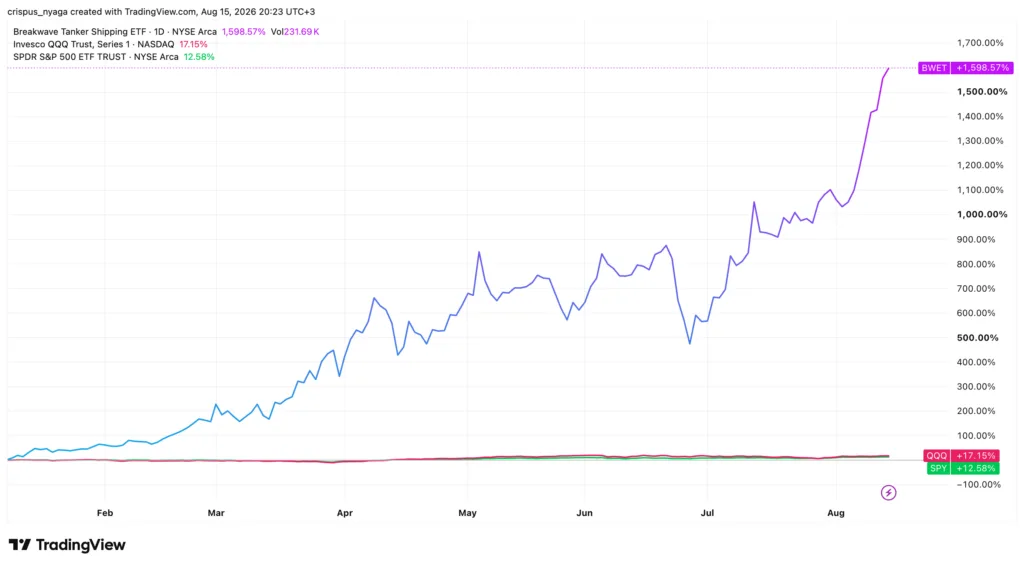
Few corners of the market have rewarded investors as spectacularly in 2026 as the Breakwave Tanker Shipping ETF (BWET), which has climbed more than 1,600% year-to-date — a gain that makes the S&P 500 and Nasdaq-100 trackers look pedestrian by comparison. The driver is not a technology breakthrough or an earnings supercycle, but something far more geopolitical: an active military conflict between the United States and Iran that has thrown global oil shipping into disarray.
At the center of the disruption is the Strait of Hormuz, the narrow chokepoint through which a significant share of the world's seaborne crude passes. The ongoing US-Iran war has curtailed traffic through that corridor, forcing tanker operators onto longer, costlier routes and simultaneously pushing freight insurance premiums sharply higher. Both forces compound each other — less supply of viable shipping capacity meeting sustained demand for crude delivery produces the kind of pricing environment that an ETF concentrated in tanker exposure is built to capture.
Read more High-Dividend ETFs Are Outpacing the S&P 500 by 9 Points in 2026 →
For investors trying to make sense of BWET's extraordinary run, it is worth understanding what the fund actually holds: exposure to near-dated tanker freight derivatives rather than equity shares in shipping companies. That structure means the ETF amplifies moves in spot freight rates with unusual leverage, which explains why a commodity-market shock can translate into quadruple-digit percentage gains — and why the ride down, if it comes, could be equally violent.
That caveat matters, because technical signals are beginning to flash caution. The Relative Strength Index for BWET has moved into overbought territory, a condition that historically precedes at least a near-term pullback in momentum-driven assets. Analysts are also watching the US midterm election calendar as a potential inflection point — political pressures around the conflict could shift the diplomatic calculus and, with it, the freight-rate environment that has powered BWET's ascent.
The BWET story is ultimately a reminder that the most extreme market returns in any given year rarely come from the assets most investors are watching. Geopolitical shocks reroute capital just as surely as they reroute ships, and the investors who positioned in tanker freight derivatives before this conflict escalated have reaped rewards that no equity index could have delivered. Whether those gains prove durable depends less on a balance sheet than on a ceasefire. Continue reading at Sahm.